

Homeschooling can feel expensive—especially when you’re just beginning to explore curriculum options and every catalog promises the perfect solution.
But one of the most beautiful truths in homeschooling on a budget is that excellent learning doesn’t have to come with a high price tag.
In our own home, we lean on Khan Academy for many subjects and pair it with The Good and the Beautiful curriculum for language arts and math. This blend has offered structure and flexibility, without weighing down our budget.
Here’s a wide-ranging look at free homeschool curriculum options and how they can be woven into a meaningful, joyful education.
What Makes a Free Curriculum Worth It?
Before we dive into specific resources, a few principles we follow:
✔️ Quality matters more than quantity
It’s better to do a few things well than many things poorly.
✔️ Learning is not limited to textbooks
Real life, books, and curiosity are all part of education.
✔️ Some “free” resources pair beautifully with low-cost materials
A little structure plus real-world learning equals lasting understanding.
With that in mind—let’s explore!

📘 1. Khan Academy — Core Skills Made Simple
Khan Academy has become a cornerstone of our homeschool, especially for:
- Math (from early math through algebra and beyond)
- Grammar and writing basics
- Science foundations
- SAT/ACT prep (for older kids)
✨ Why we love it:
Completely free, clear lessons that kids can work through independently or with a parent’s support. It’s especially helpful for self-paced skill building.
Best for: Math, science, grammar, and adaptive learning paths.
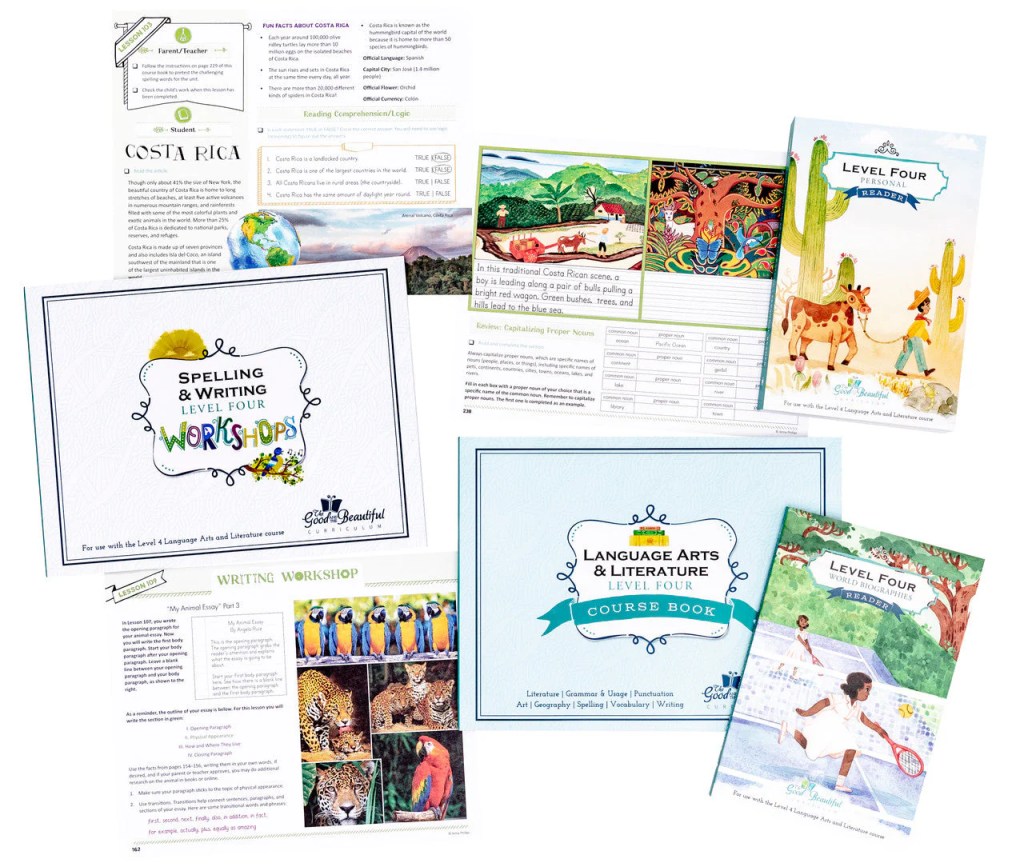
📚 2. The Good and the Beautiful — Affordable, High-Quality Curriculum
While not entirely free, The Good and the Beautiful offers:
- Free downloadable units for many subjects
- Beautiful, literature-rich language arts
- Affordable, printed open-and-go workbook curriculum options
- Nature study resources
✨ Why it’s special:
It integrates quality literature with skill building and character development. In our home, it is our go-to for language arts and gentle math lessons.
Best for: Language arts, literature, math, and family-friendly humanities.
🌍 3. Your Local Library — A Curriculum You Already Own
Most homeschoolers overlook this treasure. Your library card gives you access to:
✔️ Fiction and nonfiction books
✔️ Audiobooks and eBooks
✔️ DVDs and learning kits
✔️ Research materials and reading challenges
✔️ Storytime and community programming
✨ Why it matters:
A library can replace pricey curriculum in multiple subject areas and fuel learning across grades.
Best for: History, literature, science, and research projects.

🔤 4. Free Online Learning Platforms
There are several excellent free homeschool curriculum options available online:
⭐ BBC Bitesize
Short lessons and explanations for elementary through high school.
⭐ CK-12
Free textbooks and interactive lessons in math and science.
⭐ Easy Peasy All-in-One Homeschool
A full curriculum framework that covers most subjects with simple daily assignments.
⭐ Project Gutenberg & Open Culture
Thousands of free classic books and educational materials.
✨ Why these work:
They fill gaps, offer variety, and let you pick and choose what works for your family.
🔬 5. National Park Service & Smithsonian Learning Resources
Your children don’t need a textbook to learn about:
- American history
- Ecology and nature
- Art and culture
- Scientific discovery
Many museums and national parks provide free educator guides, videos, and activities.
✨ Bonus:
Virtual field trips, downloadable lesson guides, and hands-on ideas.
Best for: History, science, art, and interdisciplinary learning.
🎨 6. DIY and Real-Life Learning
One of the richest parts of our homeschool comes from weaving real life into learning:
- Cooking (math, science, reading)
- Gardening (biology, responsibility)
- Nature walks (observation, journaling)
- Home projects (planning, measurement)
These don’t cost anything but time—and they build lifelong skills.

How We Blend These in Our Home
Here’s what a typical approach might look like:
📌 Math:
Khan Academy for skill progression + hands-on practice
📌 Language Arts & More:
The Good and the Beautiful downloads + library books + read-aloud time
📌 Science:
Library resources + online lessons (BBC/CK-12) + nature observation
📌 Real Life Skills:
Cooking, gardening, budgeting, service projects
This mix feels whole—not overwhelming or everywhere at once.
Tips for Using Free Homeschool Curriculum Well
✅ Start with a simple rhythm, not a long list
Overplanning leads to burnout.
✅ Focus on core subjects first
Reading, grammar, math, and critical thinking matter most.
✅ Let kids help choose resources
Their buy-in makes a big difference.
✅ Track progress—not perfection
A record of growth builds confidence.
Final Thoughts
Homeschooling doesn’t have to be expensive to be beautiful.
You can build a rich, thoughtful education using:
- Free homeschool curriculum options
- Excellent online tools like Khan Academy
- Affordable or free downloads from The Good and the Beautiful
- Books from the library
- Everyday life and discovery
What feels most important is not how much you spend, but how present you are in your child’s learning.
When you choose intention over expense, joy over pressure, and curiosity over perfection—education becomes life-giving, not costly.
free homeschool curriculum, free homeschool resources, homeschool curriculum free, homeschooling on a budget, cheap homeschool curriculum, homeschool curriculum options, best free homeschool curriculum, online homeschool curriculum, frugal homeschooling, homeschool curriculum for beginners





 Homegrown Revival
Leave a comment