

A Thoughtful Look at the Controversy
If you spend any time in homeschooling circles, you’ve likely heard the question whispered—or debated openly:
Is The Good and The Beautiful a Mormon curriculum? And if so, is it appropriate for Christian families?
It’s a fair question. As parents, we care deeply about what shapes our children’s minds and hearts. Curriculum is not neutral, and discernment matters.
After using The Good and The Beautiful in our own home, watching the company’s explanations, and paying close attention to the content itself, we’ve come to a place of peace—and I want to share our perspective with you.
Where the Concern Comes From
The concern surrounding The Good and The Beautiful stems from the fact that the company’s founder and leadership are members of The Church of Jesus Christ of Latter-day Saints (LDS).
For many Christian families, this raises understandable questions about:
- Worldview
- Theology
- Subtle doctrinal influence
- Whether LDS beliefs are embedded in the curriculum
These are not unreasonable concerns. Asking them is part of responsible homeschooling.
What The Good and The Beautiful Says About Their Curriculum
The Good and The Beautiful has directly addressed this concern in both a written post and a video, explaining how their curriculum is created and reviewed.
According to the company:
- Their content is reviewed and developed by Christians from many different denominations
- They intentionally aim for faith-neutral, broadly Christian values
- The curriculum avoids LDS-specific doctrine
- Lessons focus on goodness, truth, beauty, kindness, and moral character—not theology
In other words, their goal is to create a clean, family-safe curriculum that can be used by families from many Christian backgrounds.
Our Experience Using the Curriculum in Our Home
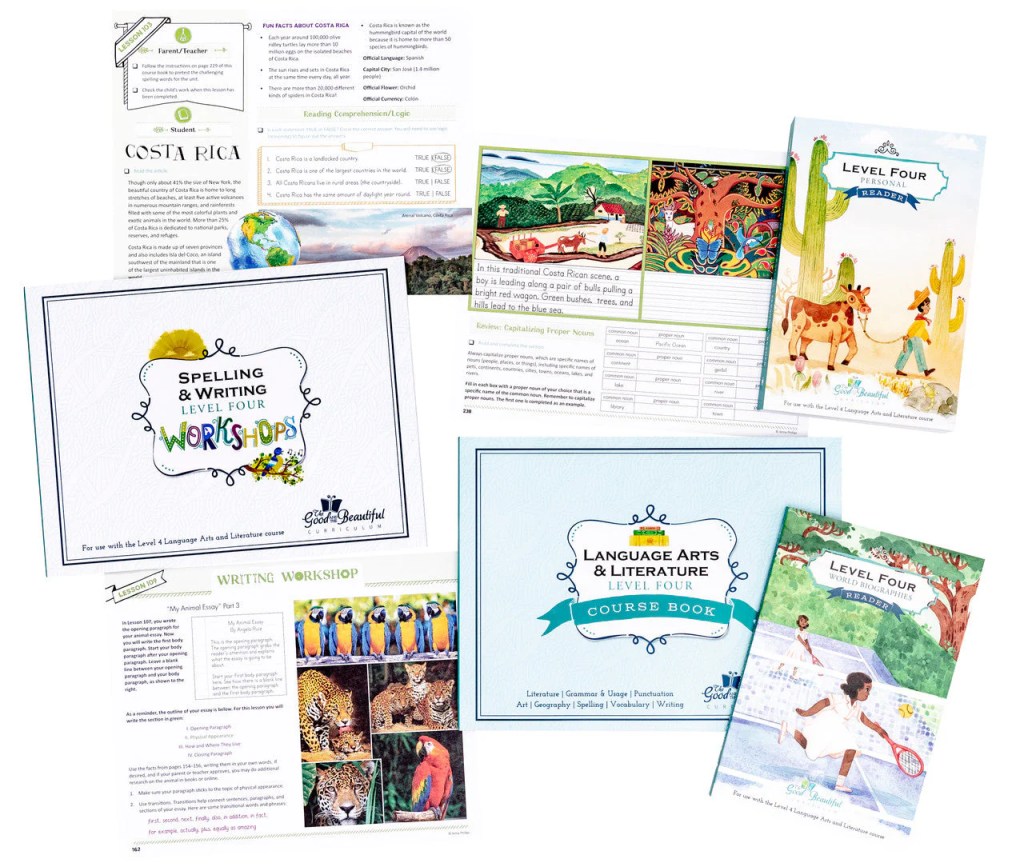
We currently use The Good and The Beautiful for language arts and math, and we’ve spent a lot of time actually reading the lessons—not just skimming them.
From our experience:
- We have not encountered LDS theology
- There are no references to Mormon-specific beliefs or practices
- Scripture use is minimal and non-doctrinal
- Moral lessons align with general Christian values
- Content feels gentle, wholesome, and appropriate
For us, the curriculum has felt generic in the best sense of the word—not pushing any specific denomination, and not contradicting our Christian beliefs.
“Christian Curriculum” vs. “Faith-Friendly Curriculum”
One helpful distinction is this:
The Good and The Beautiful is not a doctrinal Christian curriculum.
But it is a faith-friendly, morally aligned curriculum.
Families looking for:
- Explicit Bible study
- Theology instruction
- Doctrinal teaching
will likely want to add separate Bible or faith studies to their homeschool—and that’s true for many mainstream Christian curricula as well.
In our home, faith formation happens primarily through:
- Scripture reading
- Church involvement
- Family discipleship
- Daily life and conversation
Curriculum supports learning—it does not replace parenting or spiritual leadership.
Why the Company’s Religious Background Isn’t a Deal-Breaker for Us
Ultimately, we evaluate curriculum by content, not labels.
Our guiding questions are:
- What is actually being taught?
- Does it align with our values?
- Is it age-appropriate and wholesome?
- Does it encourage truth, beauty, and goodness?
Based on those criteria, The Good and The Beautiful has been a positive addition to our homeschool.
While we respect that some families may choose differently—and that’s okay—we personally do not find the company’s LDS affiliation to be a problem, given the care taken to keep the curriculum broadly Christian and doctrinally neutral.
The Importance of Parental Discernment
No curriculum—Christian or otherwise—should ever replace:
- Parental involvement
- Discernment
- Ongoing conversation
Homeschooling allows us to remain present, engaged, and aware of what our children are learning. That, more than any curriculum choice, is what protects and shapes them.
Final Thoughts
The conversation around The Good and The Beautiful often becomes louder than necessary.
In our experience, the curriculum itself is:
- Clean
- Gentle
- Morally aligned
- Educationally sound
- Free from LDS doctrine
For our family, that has been enough.
Homeschooling is deeply personal, and each family must decide what aligns with their convictions. But if you’re wondering whether The Good and The Beautiful can be used by Christian families with confidence, our answer—based on real use, not rumor—is yes.
The Good and The Beautiful curriculum controversy, Is The Good and The Beautiful Mormon, The Good and The Beautiful Christian curriculum, Good and The Beautiful curriculum review, TGTB curriculum religious influence, Christian homeschool curriculum controversy, clean homeschool curriculum, nondenominational Christian curriculum, Good and The Beautiful worldview, TGTB pros and cons, Christian homeschooling curriculum evaluation, does Good and The Beautiful include LDS doctrine





 Homegrown Revival
Leave a comment